If you ever walk through our barns or look at the photos of our cows, you may have noticed something a little different than you expected. While the classic black and white Holstein or maybe even the little brown Jersey cows are what most people think of when they think about a dairy cow, you won’t find them on our farm. Instead, you’ll see a dairy cow composed of a few different breeds.
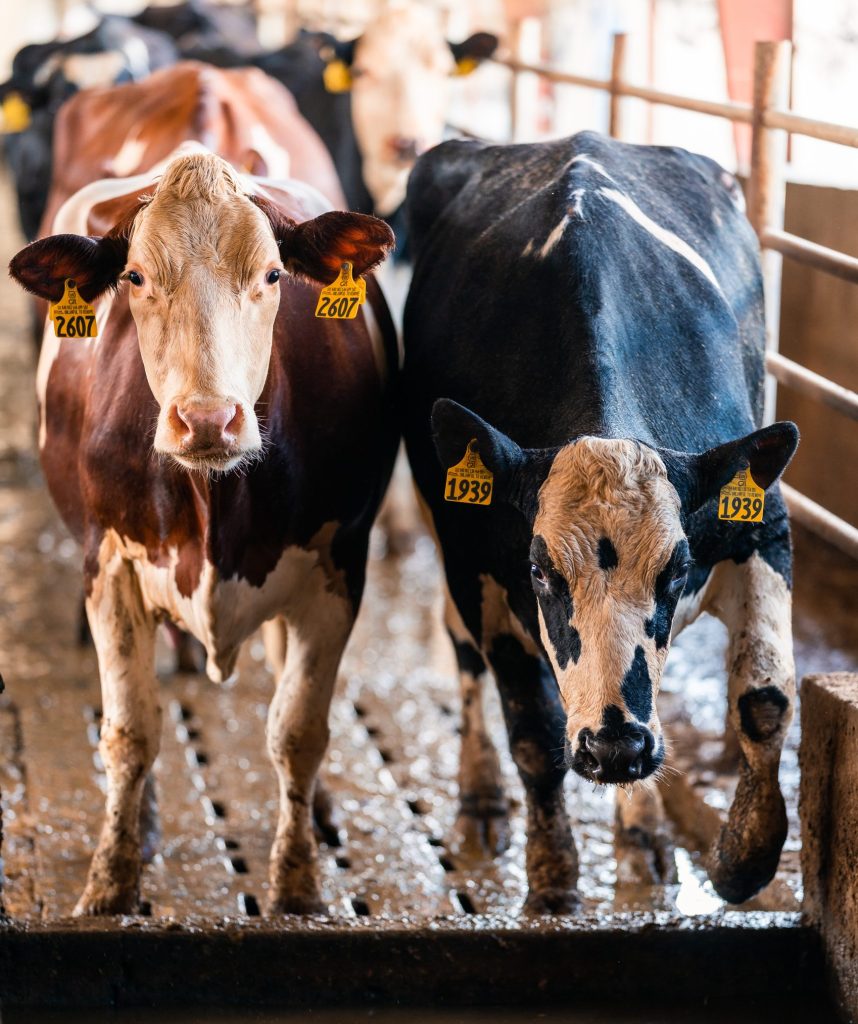
In the late 90’s and early 2000’s the Holstein breed just wasn’t changing as quickly as the farms were. At the time the standard for the Holstein breed was still based on what looked good in the show ring. While I sure appreciate those big beautiful cows, they just didn’t work well in a freestall barn and milking parlor.
So we started our crossbreeding journey back in 2003. At first, we just wanted to see how our Holstein heifers would benefit from having a smaller calf. Known for small calves, the Jersey breed was our first choice. For six months we bred heifers to Jersey and then switched back to Holstein. When the group of heifers bred to Jersey calved in, we found that the cows had a much better start with fewer calving issues right away and fewer metabolic issues down the road. Those numbers changed negatively once our heifers went back to having all Holstein calves.
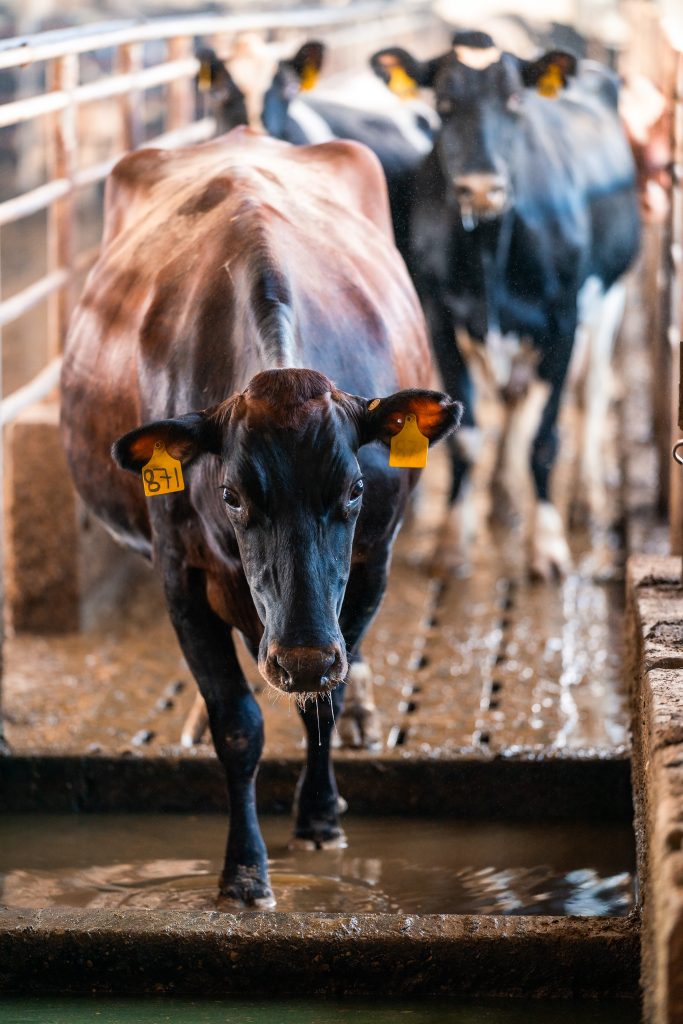
Our original plan had been to breed the half Jersey calves back to Jersey and switch our herd from Holstein to Jersey through breeding. But the Jersey cross wasn’t exactly what we wanted. The mature cows were too small for our step up and that caused problems. Jersey calves were delicate and the bull calves didn’t sell for very much.
We knew from our experiment that crossbreeding was something that could be a good step for our herd. But we were not convinced which direction we should go. There were some farms in California that had been doing crossbreeding for a while and we visited them to learn more. The farm was milking what they call a “ProCross” cow. It’s a combination of Holstein, Viking Red, and Montbeliard. In this rotation, the Holstein brings genetics for making lots of milk, and the Viking Red and Montbeliard add in better fat and protein as well as better health traits and bigger calves that have more value.
het·er·o·sis/ˌhedəˈrōsəs/noun
I’ll be honest, when I first saw these cows I didn’t like them. They didn’t look how I had been taught that cows were supposed to look like. The Montbeliard breed carries a lot more muscle and fat than I am used to. So we started with a cross of Viking Red, Jersey, and Holstein. That cross still wasn’t quite right for us. We tried using Normande and Brown Swiss instead of Jersey and that got us closer, but still not where we wanted to be. Today after trying many options we ended up going back to the combination I saw in California all of those years ago.

The crossbreeding decision is one of the very top decisions that has contributed to our success. It put us in the direction we needed to go. Today our crossbred cows live longer, are healthier, are better at reproducing, have heartier calves, and make milk with more fat and protein in it. These are all great things for our farm. But we aren’t closed off to change again in the future. I have been experimenting again with replacing the Viking Red with Brown Swiss in our rotation. And I have to say that since we started our crossbreeding program, the Holstein breed has made some huge steps forward in making a cow that works on farms like ours. If the Holstein breed continues to improve, we may go back to an all Holstein herd. Keeping an open mind and not staying stuck in one spot is part of how we do business at Majestic.