
It’s September and that means it’s corn silage season here at the farm. Corn silage is a major part of our cow’s diets so I thought I would share a little more about what corn silage is and how we make it.
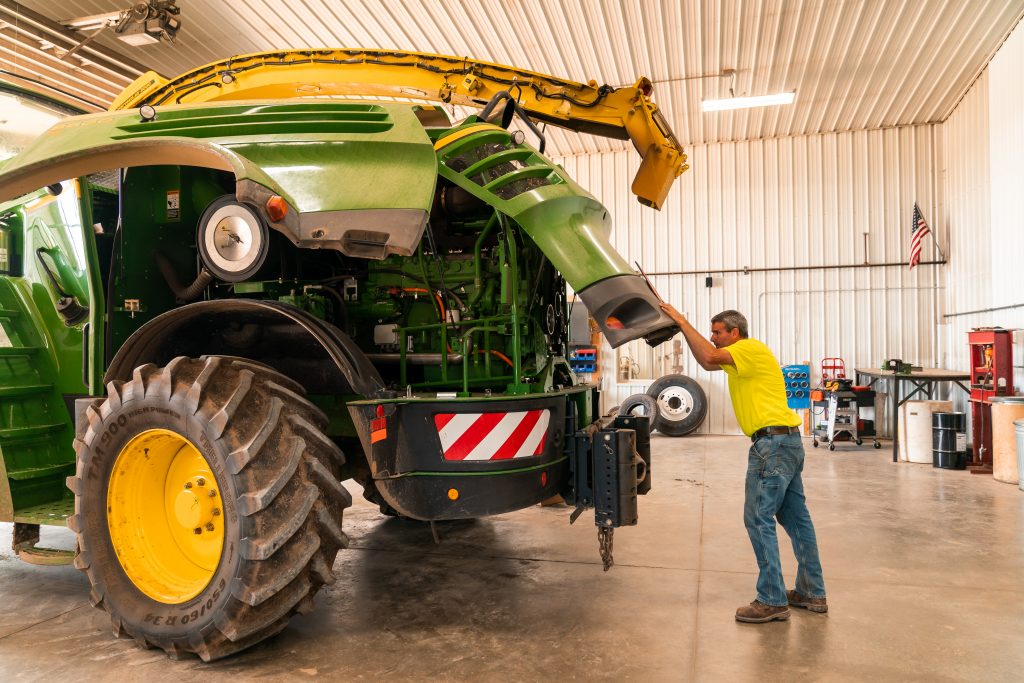
When most people think of harvesting corn they think of a combine coming in and harvesting the dry kernels of corn. However harvesting corn silage is pretty different. During corn silage harvest instead of a combine in our fields, you’ll find our chopper. Instead of storing our harvest in big bins, it is fermented in a silage bunker. Instead of harvesting just the corn kernels, we harvest the entire corn plant, including the leaves, stalk, and ears.

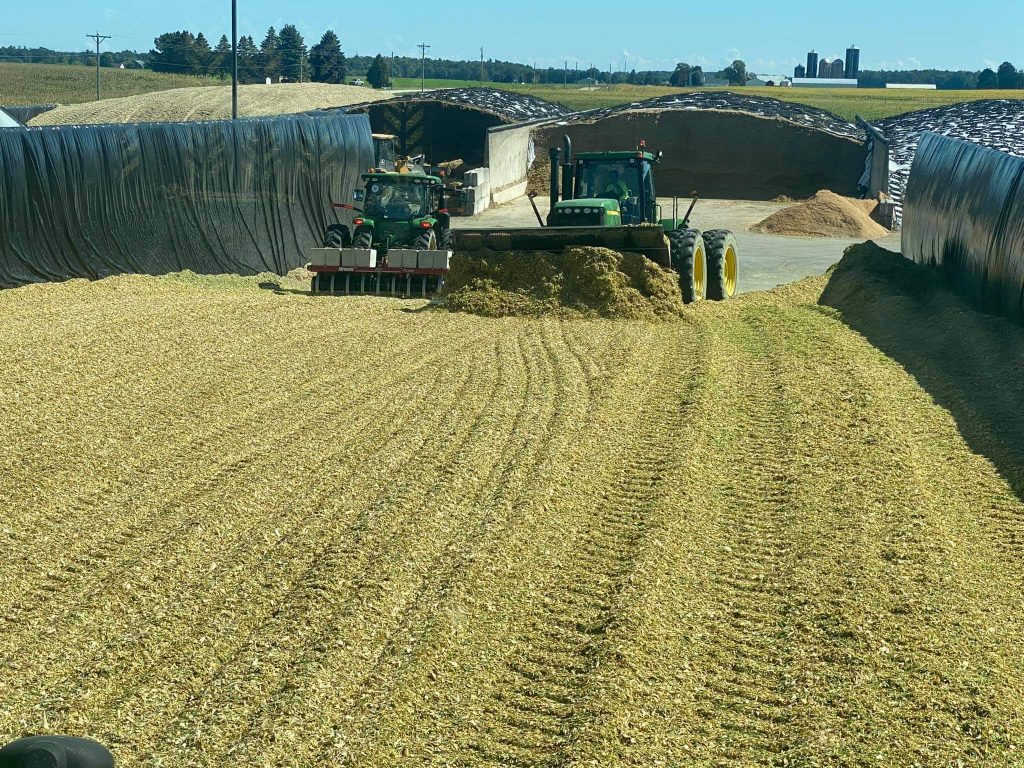
During silage harvest, our whole farm is hopping. We will have one chopper going, two or three tractors packing the pile, and four or five trucks driving back and forth delivering the silage from the fields to the pile. And that goes on for 12-14 hours of the day. Depending on how our crops grew and how much extra feed we have from the previous year, we chop anywhere from 900-1200 acres of corn for silage. If nothing breaks, the weather cooperates and everything goes perfectly, it usually takes us a couple of weeks to get our corn silage harvest done.
Unlike harvesting corn for grain, when you want the plant to be very dry when we harvest the corn plant for silage the plant isn’t completely dry. We have a specific amount of moisture that we like to see in the plant at harvest time. This is because we need moisture in the plant in order for the fermentation process to happen.
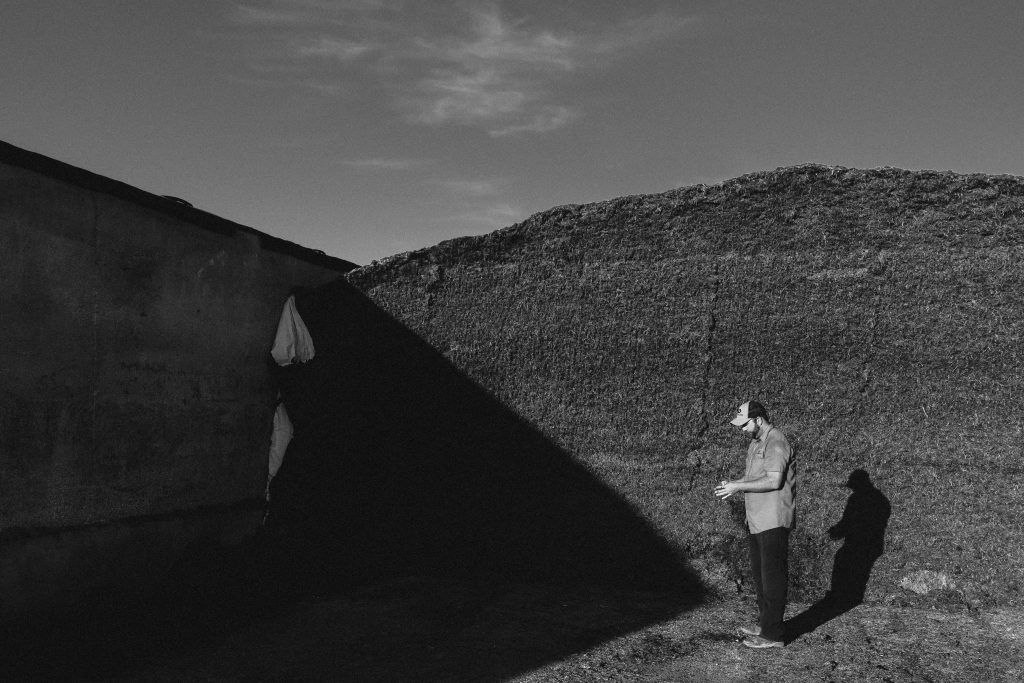
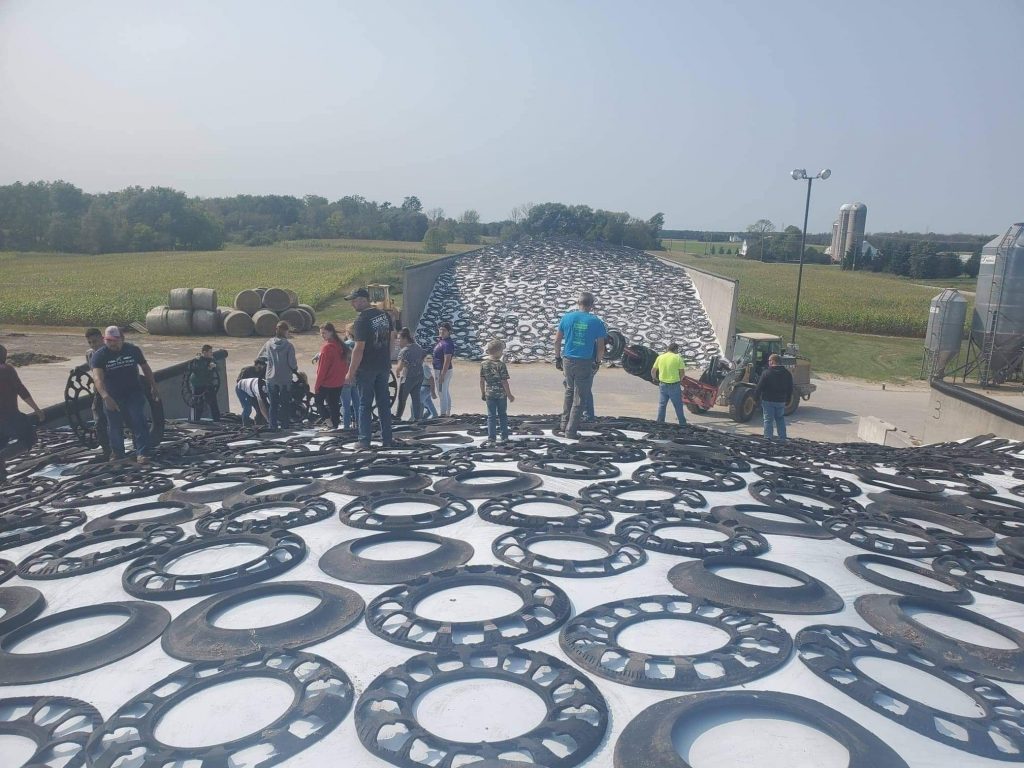
When the chopper harvests a field, the tiny pieces of the corn plant are delivered to the bunker. At the bunker, the tractors drive back and forth over the pile packing everything down as tight as possible. Once the bunker is full we cover the pile with an oxygen barrier. An oxygen barrier is a thin sheet of plastic, similar to the plastic wrap you use in the kitchen. It sticks right to the top of the silage to keep oxygen out so the feed can ferment. On top of that a thicker plastic cover that keeps the feed protected from weather and wildlife and is weighted down with tires, tops the pile off.

Covering the pile is a big job that takes a lot of hands. Thankfully we’ve done pretty well always having neighbors, friends and even friends of friends answer the phone when it’s time to get the job done. We are so thankful for their help and we always try to make the experience fun. Their help means that the chopping crew can keep working on making the next pile while we cover the one we’ve finished.
Once the silage is all chopped and stored it sits and ferments for a while. I think silage is kind of like wine, it gets better with age. The rule of thumb is that it needs three months to ferment, but if we can wait longer, it’s better. You can really see a difference in how long you wait to feed the silage. Normally, I start feeding new corn silage about Christmas time, and sometimes it still needs that little bit, and all of a sudden you get to late February, March, and then all of a sudden you see a positive response in the cows.

When we finish up corn silage, our crop harvesting is still far from done. We usually have just enough time to pull the combine out and get ready to harvest our corn and soybeans.